Bigger Haystacks, Smaller Needles - Why You Need a Stronger Culture Magnet in 2027

"In some sectors it could be seen as an employer's market as the number of people looking for roles increases."
That's Jon Holt, chief executive of KPMG in the UK, commenting on the October KPMG and REC Report on Jobs. The recruitment firms behind that survey say the number of candidates available is still rising sharply, amid reports of redundancies and fewer job opportunities.
If you're an employer, that probably sounds like good news. More people want your jobs. It would be easy to think you don't need to try as hard any more, that people are desperate for work and you'll be beating them away with shitty sticks.
I think that would be a big mistake. If anything, I think it matters more now than it did before.
Now, I know what you might be thinking. "Well, he would say that, wouldn't he? Someone who makes a living from culture, EVP, talent engagement and employer branding, telling you not to cut back on culture, EVP, talent engagement and employer branding." I'm cynical enough to raise an eyebrow at that too, because plenty of companies dress up a sales pitch as research. So I'm very aware of how this could look. I do believe it, though, and I'd rather be upfront that I could benefit if you agree with me. It's also why every number below comes from someone else's data, not mine.
I'm also not going to pretend I've got this all nailed down. What follows are signals and patterns from different countries and different data sets, not certainties.
And yes, I'm about to use the needle in a haystack analogy. I know. It's been done to death in talent, and I'm fully aware I'm about to do it again. Stick with me, though, because this isn't just about the size of the haystack. It's about the size of the needle too, and the magnet you need to pull it out.
Bigger haystacks
In the UK, there are fewer jobs and more people going for them. Indeed says UK job postings fell 11% between the start of 2026 and mid-July and are now 32% below where they were before the pandemic. The KPMG and REC survey of around 400 recruitment firms says candidate availability is still going up. To be fair, it's now rising at its slowest pace in three years, and permanent placements have started to pick up again.
The picture across the rest of Europe is more mixed. Indeed says job postings in the euro area are still at or above their pre-pandemic level, so it isn't the same squeeze as the UK. But Eurostat says the EU job vacancy rate has been falling since 2023. It was down to 2.0% in the second quarter of 2026, and it fell year on year in 15 member states.
The people who are looking are sending out more applications than ever. LinkedIn's CEO, Dan Shapero, says job seekers are sending 30% more applications than they did before the pandemic (Fortune). Greenhouse CEO Daniel Chait told Fortune his platform sees around 254 applicants for every job ad, with applications per recruiter up 412%.
Recruiters are starting to buckle under the load. When Greenhouse surveyed job seekers, recruiters and hiring managers across the US, UK, Ireland and Germany, Chait said talent acquisition teams are "drowning in so many applications they're looking for ways to sort through what's real and what's not". In the US, Robert Half found 84% of HR leaders say their teams have heavier workloads, and 67% say reviewing AI-generated applications has slowed hiring down.
Smaller needles
A bigger haystack is only half of it. The needles are getting smaller too.
When AI helps everyone write a polished CV and a tidy cover letter, a lot of applications start to look the same. The good people are still in there. They're just harder to spot, because everyone around them looks good on paper as well.
Shapero described it as "a sea of applicants coming in our direction that look pretty similar", and has said it's "gotten harder and harder for employers to know who can actually do the job anymore". Greenhouse's chief people officer, Sharawn Tipton, says employers are sifting through "AI-polished resumes that all look the same" (Greenhouse). And in the Robert Half survey, 65% of hiring managers said the surge in applications, many of them enhanced or written by AI, has made it harder to check whether people really have the skills they claim.
So you've got a bigger haystack with smaller needles in it. Digging harder, or hiring more people to dig, probably won't fix that on its own. You need a stronger magnet.
Enjoying this? I can pop the next one in your inbox if you'd like.
What the magnet is made of
A magnet doesn't care how big the haystack is. It pulls the needles out and leaves the hay behind.
When I say magnet, I don't just mean your employer brand. I mean a chain of four things that have to work together:
- Understanding your culture - what it's really like to work for you, the good bits and the hard bits.
- Being clear on the deal - what you offer people, and what you need them to give in return.
- Representing that deal accurately and realistically through your employer brand.
- Getting those messages out there, through content and conversations, as part of your talent attraction.
It's a chain, so it's only as strong as its weakest link. A shiny careers site built on a culture nobody has properly understood falls apart the moment someone joins. An honest, clear deal that never reaches the right people doesn't attract anyone. I've worked across every link in that chain over the last 20-odd years, from recruitment and talent attraction to culture transformation, people experience, L&D and consumer marketing.
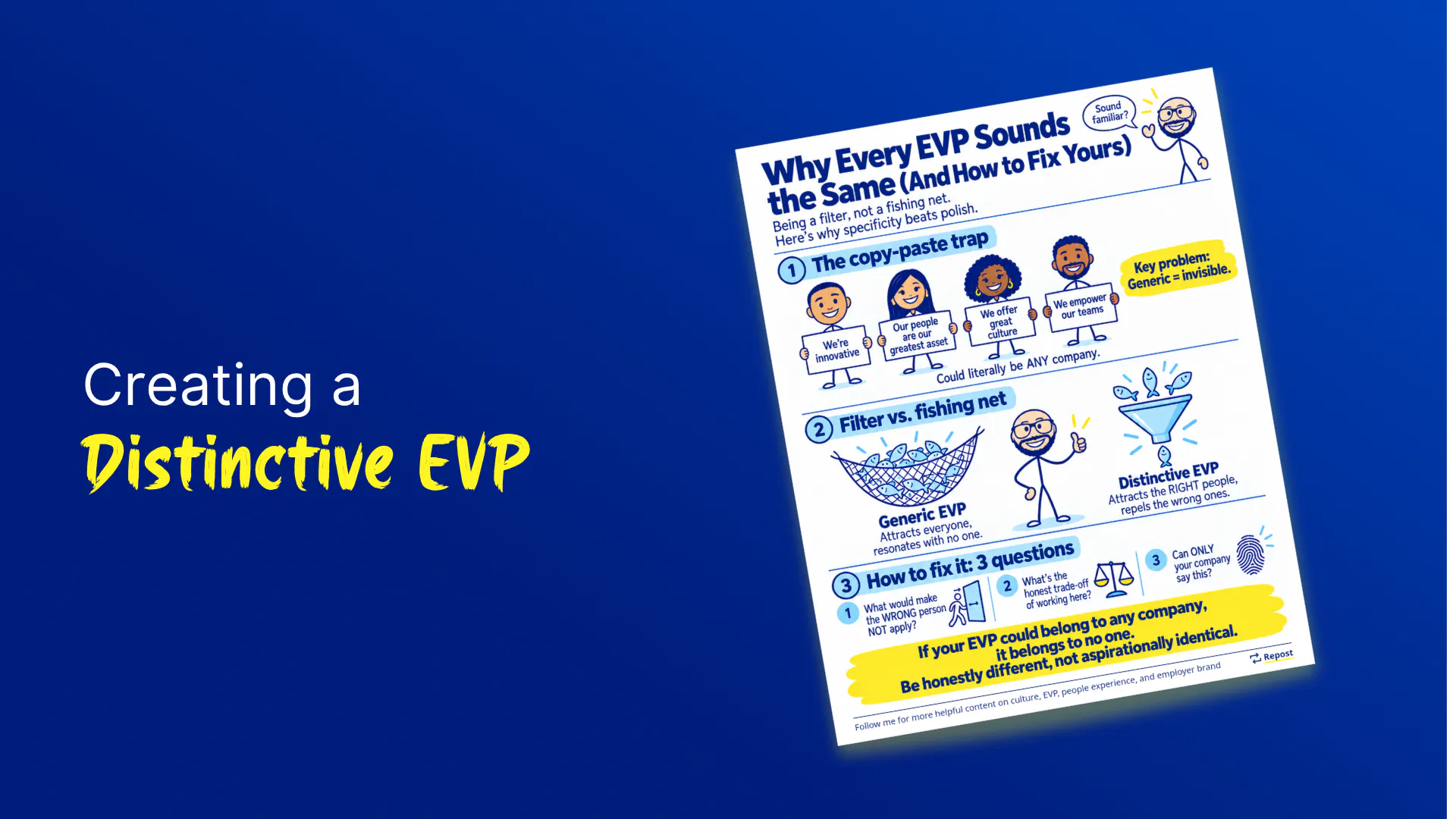
When the chain works, it tells the right people why they'd love working for you, and it tells the wrong people why they probably wouldn't. The people who fit move towards you. The ones who don't stay in the pile, ideally before they apply, rather than after someone has had to read their CV.
The Institute of Student Employers has picked up the same tension in early careers hiring. It says organisations are under pressure to justify their attraction budgets when application numbers are already high. Volume is up, so the intuitive thing is to say, "I get it. If we're getting all these applications, one thing we can cut is employer branding."
But it's wrong. A bigger, messier haystack needs a stronger magnet, not a weaker one.
Not every haystack is growing
There's a twist in the Greenhouse data. Chait says applications pile up at companies with big, well-known brands, which get tens of thousands of applications for a single role. A very similar company that isn't as well known "might have very few applicants".
That's especially worth thinking about if you're a scale-up. Your problem might not be too many applications at all. It might be that the right people don't know you exist, or can't tell you apart from the company down the road.
So the magnet has two jobs. It has to pull the right people towards you in the first place, and then help them stand out from everyone else in the pile.
Picking the wrong needle could get a lot more expensive in the UK
This bit is UK-specific. From 1 January 2027, employees in England, Scotland and Wales will be able to claim unfair dismissal after 6 months in a job, instead of 2 years. The cap on unfair dismissal compensation is also being removed. Northern Ireland has its own rules, so it isn't covered (Acas, Business.gov.uk).
The government says around 6.3 million employees have been with their current employer for between six months and two years, so this is a big group of people.
To be fair, the government also points out that the vast majority of unfair dismissal awards are well below the current cap. And this doesn't mean you can't part ways with someone who isn't working out. It means that after 6 months, they can challenge it. I'm not an employment lawyer, so if this affects you, speak to one.
What it does mean is that getting a hire wrong is likely to cost more, and you'll have less time to spot it. My assumption is that probation and onboarding are going to get a lot more attention next year. The cheapest place to get it right, though, is before anyone applies, by being honest about what the job and the culture are really like.
The ones who stay
Retention may not be the big problem. When the job market feels this tight, people are less likely to jump. According to Gallup, only 49% of UK employees think now is a good time to find a job where they live, compared with 57% across Europe.
But keeping people isn't the same as engaging them. Gallup puts UK employee engagement at 10%, against 12% for Europe and 20% globally. 83% of UK employees are "not engaged". The number who are actively disengaged has halved since 2022, from 14% to 7%, while the not engaged group has grown from 76% to 83%. Gallup doesn't say why, but on the face of it, fewer people are openly unhappy and more are just turning up.
Manpower has published a report on this called Job Hugging Isn't Engagement, about people staying in their roles while quietly keeping an eye on what's out there.
So the problem might shift from retention to productivity. People may stay in their seats out of resentment rather than engagement, and output probably drops as a result. The less engaged they are, the less likely they are to go the extra mile, the more pressure lands on the people who do, and round it goes.
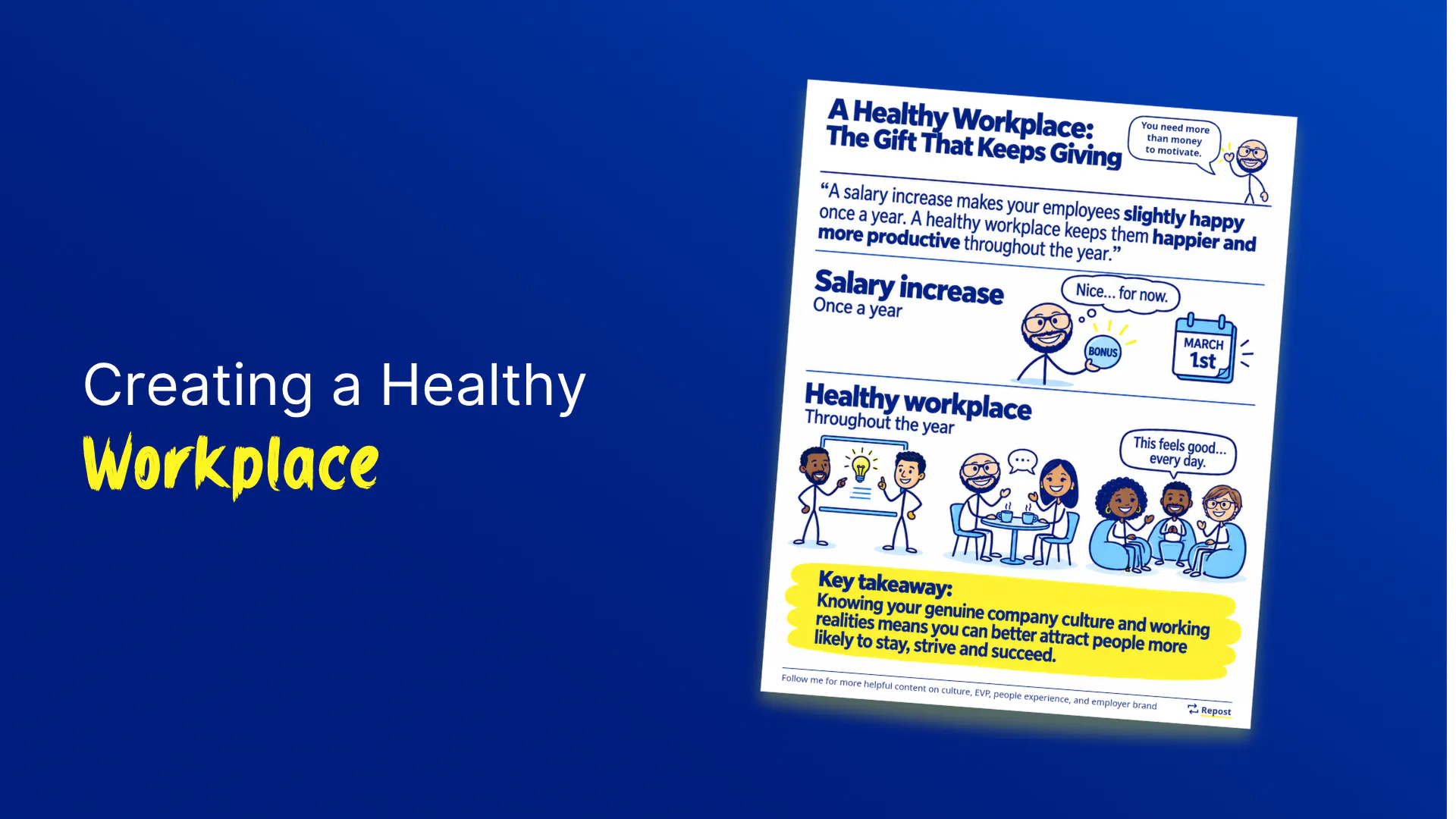
The same chain works on the people already inside. If you understand your culture and you're honest about the deal, the people who work for you should recognise themselves in what you say. If they don't, they'll know, and that gap between what you say and what they live is probably one of the quickest ways to turn an engaged employee into someone who's just turning up. It's why I think of all this as attracting and keeping the people who are likely to thrive with you, not just filling roles.
Turn it up, don't turn it down
More applications don't mean more of the right people. They mean more hay.
If you're tempted to dial down your culture, EVP or employer brand work because you're already getting plenty of applicants, I'd think twice. If anything, I'd turn it up, and make it sharper rather than louder.
If you want to see how you come across to candidates using AI in their job search, TalentTell will show you, for free. And if you fancy talking through any part of the chain, from understanding your culture to getting the message out there, give me a shout. We may not end up working together but I guarantee you'll leave the conversation with plenty to think about.
Like what you're reading?
If my content resonates with you, I can deliver it to your inbox whenever I publish something new. No fluff and definitely no spam.