
Your Culture, Strategy & EVP Love Triangle
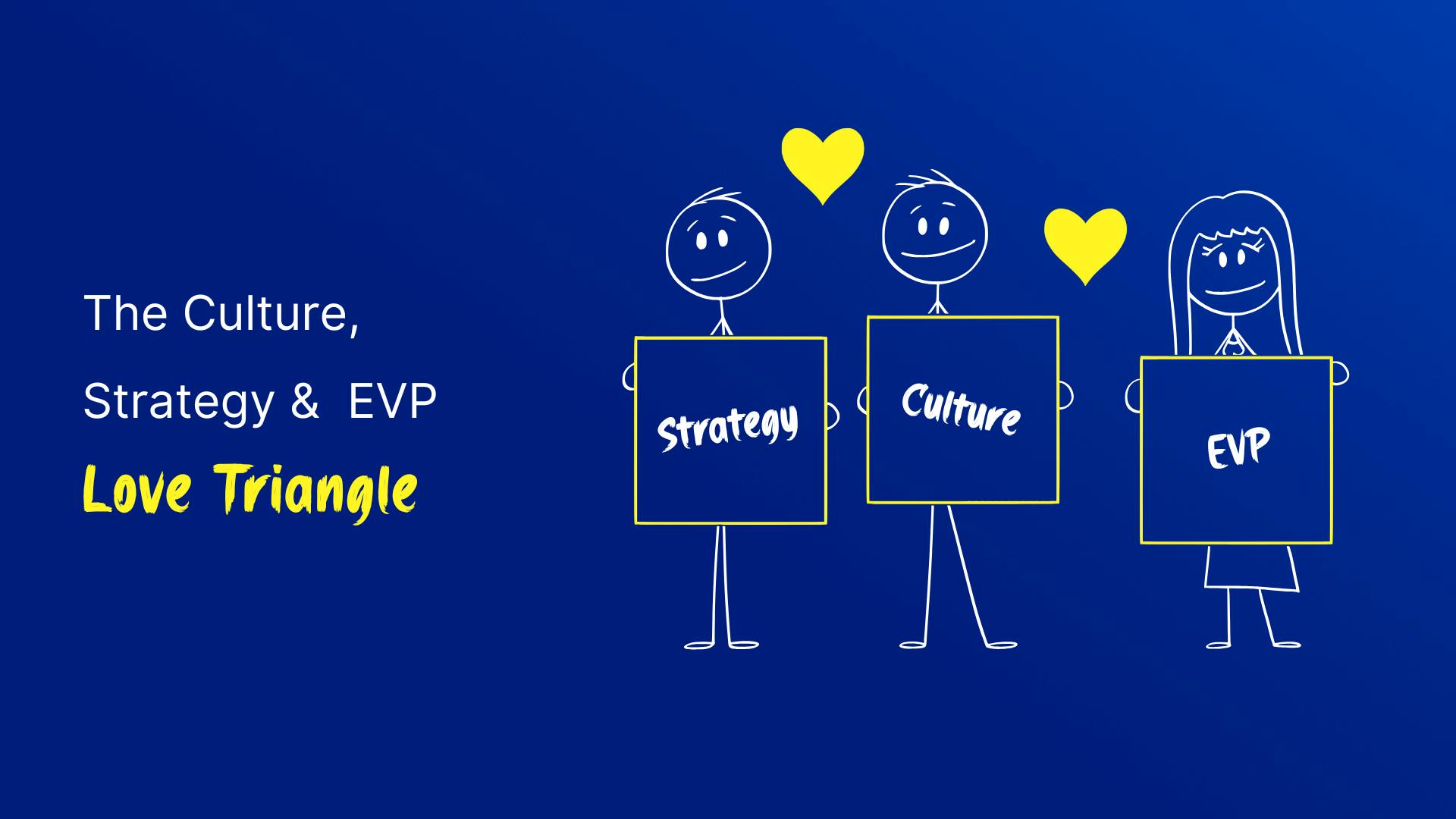
Peter Drucker's famous line "culture eats strategy for breakfast" has achieved almost mythical status in business circles. It's quoted in board meetings, plastered on office walls, and referenced in countless LinkedIn thought pieces.
The problem is that it’s not entirely true. A lot of culture is rooted in behaviours. Ask an economist how to predict behaviour and they’ll tell you to look at the rewards and punishments at stake. People will flex their behaviour to achieve the former whilst avoiding the latter. Garry Ridge took the market cap of WD-40 from £300 mil to £3.6 bil upon a formula of “the will of your people multiplied by strategy = business outcome,”
So, it’s not about one eating the other. They must dine together. A brilliant strategy executed within a toxic culture is destined to fail. But so will energised and motivated people if they’re not all channeling that energy in the right direction.
There’s also a third wheel in this business-related love triangle. Your EVP.
Your EVP is the promise you make to employees about what they'll get in return for their contribution. It's not just compensation (though that matters). It's the complete package, which I frame in a model I’ve called the 5 Ps - pay, perks, prospects, positive environment and pillars of culture.
Whilst culture determines whether people stay and thrive, your EVP determines whether the right people even consider you in the first place.
Enjoying this? I can pop the next one in your inbox if you'd like.
Companies with genuinely good cultures struggle to recruit because they can’t articulate why someone should choose them over a competitor. They assumed culture would speak for itself. It doesn't. Not in a noisy talent market where everyones saying they have a "great culture."
The real carnage happens when your EVP and culture are misaligned. You attract people based on promises you can't keep, then wonder why they leave within 12 months (taking their recruitment costs and training investment with them).
This isn't theoretical. Companies routinely oversell flexibility, undersell bureaucracy, or promise rapid growth in organisations where progression moves at glacial pace. The result? Good people joining for the wrong reasons, becoming disillusioned, then heading for the exits, sharpish.
To do it well, you’ve got to ensure strategic, cultural, and EVP alignment:
- Your EVP articulates your honest promise
- Your culture delivers on that promise daily
- Leadership models the behaviours both require
- The employee experience consistently reinforces both motivationally
- Your strategy is clear, compelling and consistently communicated
This means being brutally honest about what you offer and what you don't. If you're not the most innovative company, don't pretend to be. If you can't offer rapid progression, be upfront. There are people who want stability and clear processes. Be their first choice, not everyone's second.
Most organisations haven't properly defined their EVP beyond generic statements that could apply to anyone. "We value our people." "We're innovative." "We offer opportunities to grow."
Meaningless. Every company says this.
Your EVP needs to be specific enough that someone can decide whether you're right for them. It's a filter, not a fishing net. The goal isn't to be everything to everyone - it's to be something to someone. It’s about being irresistible to the right people and clearly wrong for everyone else.
So whilst your culture and strategy enjoy whatever meal of the day they fancy having together, a poorly articulated EVP could leave you struggling to get the talent you need to execute that strategy and nurture your culture in the first place.
Like what you're reading?
If my content resonates with you, I can deliver it to your inbox whenever I publish something new. No fluff and definitely no spam.


