
The Culture Problem Scale-Up Founders Often Don't See Coming
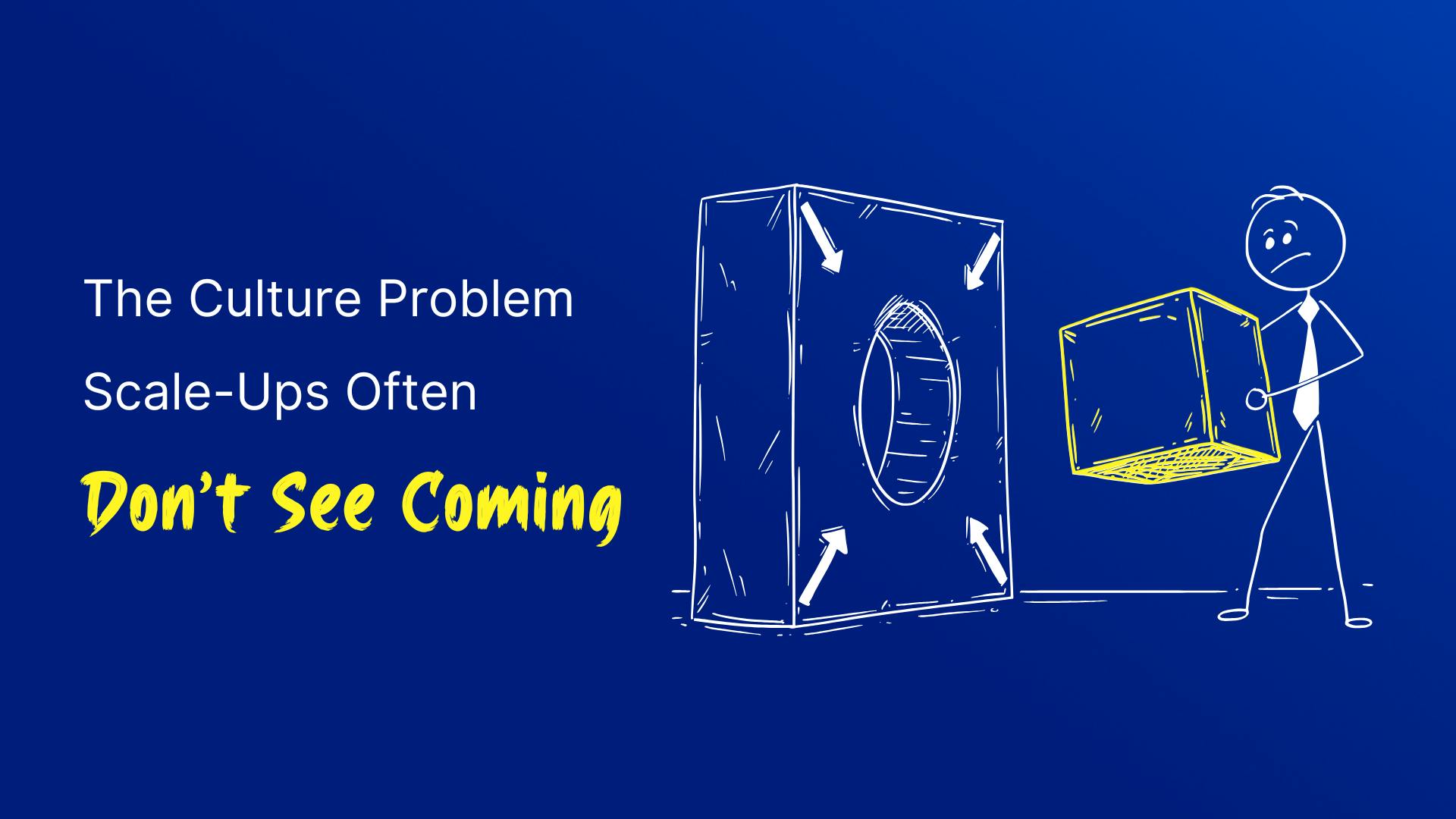
Once companies get beyond a certain size there's no such thing as 'one company culture.'
And if founders of scale-ups walk around believing everything that was okay before will continue being hunky-dorey in future, they risk walking around in the cultural equivalent of the emperor’s new clothes.
I've been speaking with several HR leaders in scale-ups led by highly successful entrepreneurs, fresh off Series B or C funding. They're at 100-150 headcount with hyper-growth plans about to kick in.
The pattern I’m seeing is that the confidence and culture that got these founders here is making them think everything's fine. "We've got a great culture. It's under control. No challenges on the horizon."
I’d probably be the same in their shoes if I didn’t have my experience and hindsight. That confidence is a feature, not a bug - it's part of what made them successful. But at this stage, it becomes a blind spot.
What they’re not seeing is that at around 150 people, the social dynamics of an organisation fundamentally shift. It's not my opinion – it's anthropology. (Look up Dunbar's Number if you want science.)
Direct relationships with all employees and all leadership become impossible. Middle managers become necessary and the real culture carriers. Functional teams start developing their own norms and identities. And, unless there's deliberate mid-management alignment, they'll naturally create micro-cultures based on their own leadership style, priorities and interpretation of company values - whether these are communicated explicitly or implicitly.
If you you’re not deliberate about defining who you are and how you work before this point, you risk spending the next 18+ months firefighting the symptoms:
- Attrition creeping up.
Enjoying this? I can pop the next one in your inbox if you'd like.
- Long-tenured people who "used to fit" suddenly aren’t gelling.
- New joiners not fitting in as seamlessly as they used to.
- Morale dipping - and dragging productivity, employee experience, and customer satisfaction down with it.
The companies that scale well aren't the ones who react to these problems. They're the ones who saw them coming and built the foundations before the cracks appeared.
We’d all love the idea of a unified culture - one set of values, one way of working, everyone singing from the same hymn sheet. It makes for great marketing copy and impressive investor decks.
But it's complete fiction.
Walk through any organisation with more than 50 - 100 people and you'll find multiple cultures operating simultaneously. The sales team lives in a different world from finance. Engineering speaks a different language from marketing. Customer service operates under entirely different pressures from leadership. Same company. Different realities.
I’ve seen this many times when working in-house or with clients. They've spent months crafting the perfect culture statement - usually involving words like 'innovative,' 'collaborative,' and my personal “favourite”, 'dynamic’ - and then they're genuinely baffled when it lands differently across the business.
The software developers eye-roll at the mandatory fun. The finance team questions the ROI of the wellbeing budget. Sales just want to know how this helps them hit their targets.
And then organisations compound the issue. They double down. More communications. More initiatives. More insistence that everyone needs to get with the programme. It all becomes a bit ‘cult’ not ‘culture’.
What if heads were removed from the cultural sands and the obvious was acknowledged instead?
Different teams have different needs, different working styles, different motivations. A product manager and a customer service representative might both work for the same company, but their daily experiences are worlds apart. Why would we expect the same cultural approach to resonate with both?
This isn't about abandoning company-wide values. It's about accepting that those values will manifest differently across your organisation - and isn’t just okay, it's healthy.
The question then becomes: “Okay smart-arse… How do you flex?”
Start by actually listening to each part of your business. Not through annual engagement surveys that get averaged into meaningless scores, but proper conversations. What matters to your logistics team? What frustrates your designers? What would make your accountants' lives genuinely better?
Then - some might need to brace themselves for this bit - give teams some autonomy to shape their own micro-cultures within the broader framework. Let engineering run their standups differently from sales meetings. Allow different departments to experiment with working patterns that suit their workflow.
The goal shouldn’t be to impose uniformity. It's to provide the connective tissue - the shared purpose, the clear direction - while allowing for local adaptation.
Think of it like jazz rather than classical music. You've got the core structure, the key themes, but there's room for improvisation. In fact, the improvisation is what makes it work.
This approach requires more sophistication from leadership. Which in scale-ups is another challenge. Most mid-managers are early in their careers and have become ‘leaders’ by osmosis as the business has grown. They may have been fantastic subject matter experts (SMEs) but that’s no indication of how well they can lead other humans. They’ve had no formal training. Most don’t know how to have difficult conversations with under-performers let alone how to intentionally create a productive, inclusive and diverse sub-culture for their team / department.
It's easier to roll out blanket policies than to think contextually. But if you genuinely want people to feel the culture rather than just read about it on wall posters, you need to meet them where they are.
Because, whether you face into it or not - once you hit a certain size - your company already has multiple cultures. The only question is whether you're going to pretend otherwise or actually work with that reality and set yourself up for a less painful, more successful ride in future?
Like what you're reading?
If my content resonates with you, I can deliver it to your inbox whenever I publish something new. No fluff and definitely no spam.


