
Building Agile EVPs For a Rapidly Changing World
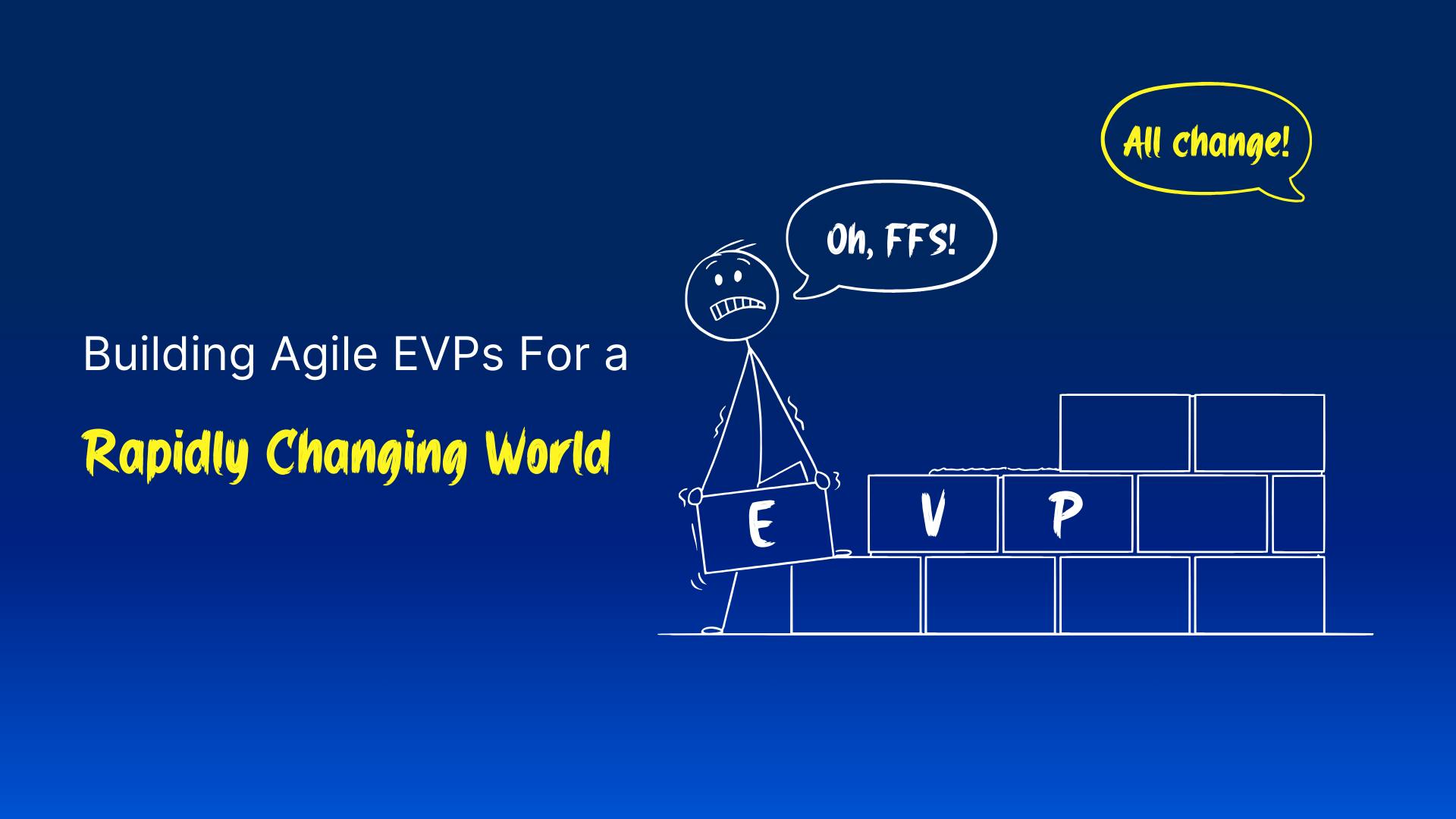
In today's ever-evolving business landscape, organisations face the challenge of attracting and retaining top talent in a competitive market. Central to this challenge is the Employer Value Proposition (EVP) concept, which encapsulates what an organisation stands for, offers, and requires as an employer from its employees. However, as the world changes at break-neck speed, traditional, static EVPs must now continually evolve in line with the consistently transforming organisations they're created to represent.
Adaptable, "agile EVPs" now need to be built and maintained for them to stay relevant for the longer term.
Understanding the EVP
Before getting into agile EVPs, it's important to understand what one is and why it matters.
I've covered this in a previous post/video, but an EVP is essentially the unique set of benefits an employee receives in return for the skills, capabilities, and experience they bring to a company. It goes beyond just salary and benefits to include things like career development opportunities, work-life balance, company culture and prospects, and a sense of purpose. A well-crafted EVP serves several functions:
- It attracts talent by communicating what makes the organisation a great workplace.
- It helps retain valuable employees by reinforcing the benefits of staying with the company.
- It can guide HR policies and practices to ensure they align with employee promises.
- It should differentiate the organisation from competitors in the talent market.
The Need for Agility in EVPs
Traditionally, EVPs were developed in quite a static way, revisited perhaps every few years. However, the rapidly changing nature of today requires a more dynamic approach. Several factors drive this need for agility:
- Technological advancements: The rapid pace of technological change is transforming jobs and creating new roles at an accelerated rate.
- Changing workforce demographics: With multiple generations in the workforce, each with different expectations and values, a one-size-fits-all EVP is no longer effective.
- Global events: As demonstrated by the COVID-19 pandemic, global events can rapidly shift priorities and expectations of both employers and employees.
- Evolving employee expectations: Today's employees, particularly younger generations, are seeking more than just financial rewards from their work.
- Increased transparency: With platforms like Glassdoor and LinkedIn, employees have more insight into other companies' offerings, raising expectations.
- Gig economy growth: The rise of freelance and contract work is changing how people view employment relationships.
An agile EVP is one that can adapt quickly to these changing circumstances while maintaining its core essence. It's flexible enough to remain relevant in different contexts and to different employee segments, yet consistent enough to complement a clear employer brand. (Check out this post for the difference between EVP and employer brand)
Enjoying this? I can pop the next one in your inbox if you'd like.
Building an Agile EVP
Creating an agile EVP requires a shift in mindset. Here are key approaches for incorporating the necessary agility:
- Continuous listening: Implement regular feedback mechanisms to stay in tune with employee needs and expectations. This could include pulse surveys, focus groups, and exit interviews.
- Segmentation: Recognise that different employee groups may have different needs and values. Create flexible EVP elements that can be tailored to various segments while maintaining a core proposition. For example, a culture of 'growth and development' may mean different things to different generations.
- Scenario planning: Anticipate potential future scenarios and how they might impact your EVP. This foresight allows for quicker adaptation when changes occur. What if there's a significant economic downturn or rapid company growth? How could you flex your EVP in either scenario?
- Core and flex model: Identify the core elements of your EVP that should remain constant and which elements can be more flexible, adaptable, or even added to some areas. For example, Lego added a pillar specifically for a region in the 'gold rush' of companies opening in China. "We're here to stay" was important to the Chinese, where relocating to a new province was a massive upheaval for people. They wanted to be assured it wouldn't be a waste of time and effort if the company were soon to leave the country. This stability assurance was important to the Chinese, whereas it wasn't necessary for Denmark, where it was already an absolute given.
- Cross-functional collaboration: Involve various departments (HR, Marketing, Operations) in EVP development to ensure a holistic view and more straightforward implementation of changes.
- Technology integration: Leverage HR tech tools for data analytics and personalisation to make your EVP more responsive and relevant to individual employees.
- Regular review cycles: Instead of major overhauls every few years, implement more frequent, smaller reviews and adjustments to your EVP every 6 - 12 months, depending on the rate of change within your organisation.
Components of an Agile EVP
While the specific elements of an EVP will vary by company, an agile EVP should consider as many of the following components as possible (in no particular order):
- Purpose and values: These form the core of the EVP and should remain relatively stable, providing a consistent foundation.
- Flexible work arrangements: As demonstrated by the shift to remote work during the pandemic, the ability to offer flexible working options is becoming increasingly crucial.
- Personalised development: Offer adaptable career paths and learning opportunities that can be tailored to individual needs and changing job markets.
- Holistic well-being: Include physical, mental, and financial well-being initiatives that can be adjusted based on current needs and circumstances.
- Inclusive culture: Emphasise a commitment to diversity, equity and inclusion that can evolve with societal changes and expectations.
- Competitive compensation: While important, this should be balanced with other elements and be adaptable to market conditions.
- Social responsibility: Highlight the organisation's positive impact on society, which can be adjusted to address current global challenges.
Implementing and Communicating an Agile EVP
Having an agile EVP is only half the battle. It must also be effectively implemented and communicated. Here are some ways to achieve this:
- Transparent communication: Clearly articulate the EVP and any changes to all stakeholders, explaining the rationale behind adjustments.
- Leader alignment: Ensure leaders at all levels understand and can communicate the EVP, as they play a crucial role in bringing it to life.
- Employee involvement: Engage employees in the evolution of the EVP, making them active participants rather than passive recipients. Contribution to something builds greater feelings of ownership as Vicky Saunders shared in her LinkedIn post.
- Consistent messaging: While the EVP may be agile, ensure that core messages remain consistent across various communication channels.
- Real-time updates: Use digital platforms to communicate EVP updates quickly and efficiently.
- Measure and iterate: Regularly assess the effectiveness of your EVP through metrics such as employee engagement, retention rates, and candidate quality. Use these insights to refine your approach continually.
- Storytelling: Use real employee stories and experiences to bring your EVP to life. These stories can be updated regularly to reflect current realities and successes. Don't say you're "innovative" or "collaborative" etc. Show how you're these things, and what they actually mean within your company through the voices of your people.
- Multi-channel approach: Use a mix of communication channels, including social media, the company intranet, team meetings, and one-on-one conversations, to ensure the EVP reaches all employees and potential candidates.
Challenges in Maintaining an Agile EVP
While the benefits of an agile EVP are clear, there are challenges (Isn't there always?!):
- Balancing consistency and change: It's important to maintain a consistent core identity while allowing for flexibility. Too much change can lead to confusion and a lack of a clear employer brand.
- Resource intensity: Continuously monitoring, adjusting, and communicating an agile EVP requires significant time and resources. Expecting one person to manage all of this isn't feasible and will probably lead to that person getting burnt out, which could then result in a negative review on Glassdoor. Oh, the irony.
- Stakeholder alignment: It can be problematic to ensure that all stakeholders, from C-suite executives to line managers and frontline workers, understand and support the agile EVP approach. Regular check-ins and permission from the top to hold people accountable is important.
- Technology integration: Implementing the necessary technology to support an agile EVP (such as advanced HR analytics tools) can be complex and costly. Also, thinking that tech will be your silver bullet can lead to problems. In most cases, your challenges will be more behavioural than technological. You can have all the platforms in the world, but if people don't have the commitment or competence to use them properly, then you'll always be on the end of a 'shit in, shit out' experience - whilst those guilty of causing this scenario point at and blame the tech for reasons of self-preservation.
- Cultural shift: Moving from a static to an agile EVP requires a shift in organisational mindset, which can be met with resistance.
The Future of Agile EVPs
As we look forward, several trends are likely to shape the evolution of agile EVPs:
- AI and personalisation: Artificial Intelligence could enable highly personalised EVPs tailored to individual employee preferences and career stages. For example, using AI to analyse an employee's work patterns, career goals, and preferences to offer a tailored benefits package, such as suggesting specific learning opportunities or flexible work arrangements.
- Gig economy integration: EVPs may need to expand and encompass both traditional employees and gig workers, offering flexibility and security, and providing a tiered EVP that gives core benefits to all workers - with additional adaptability between full-time employees and contractors.
- Global vs. local balance: Multinational companies will need to strike a balance between a global EVP and localised versions that cater to different cultural contexts. For example, one might maintain a global EVP focused on innovation and sustainability while offering locally tailored elements such as specific holidays or work-life balance practices that align with regional traditions.
- Purpose-driven EVPs: As younger generations prioritise working for organisations with a strong sense of purpose, this element of EVPs is likely to become increasingly important.
- Sustainability Focus: Environmental and social responsibility are likely to become core components of EVPs as climate change and social issues gain prominence.
In a world characterised by rapid change and uncertainty, the ability to build and maintain an agile Employer Value Proposition is becoming increasingly important. An agile EVP allows organisations to respond swiftly to changing circumstances, employee expectations, and market conditions while maintaining a consistent core identity.
By embracing continuous listening, leveraging technology, and fostering a culture of adaptability, organisations can create EVPs that resonate with diverse employee groups and remain relevant in the face of global shifts.
Like what you're reading?
If my content resonates with you, I can deliver it to your inbox whenever I publish something new. No fluff and definitely no spam.


