The Employer Brand Ownership Debate is Back (And It's Still Missing the Point)
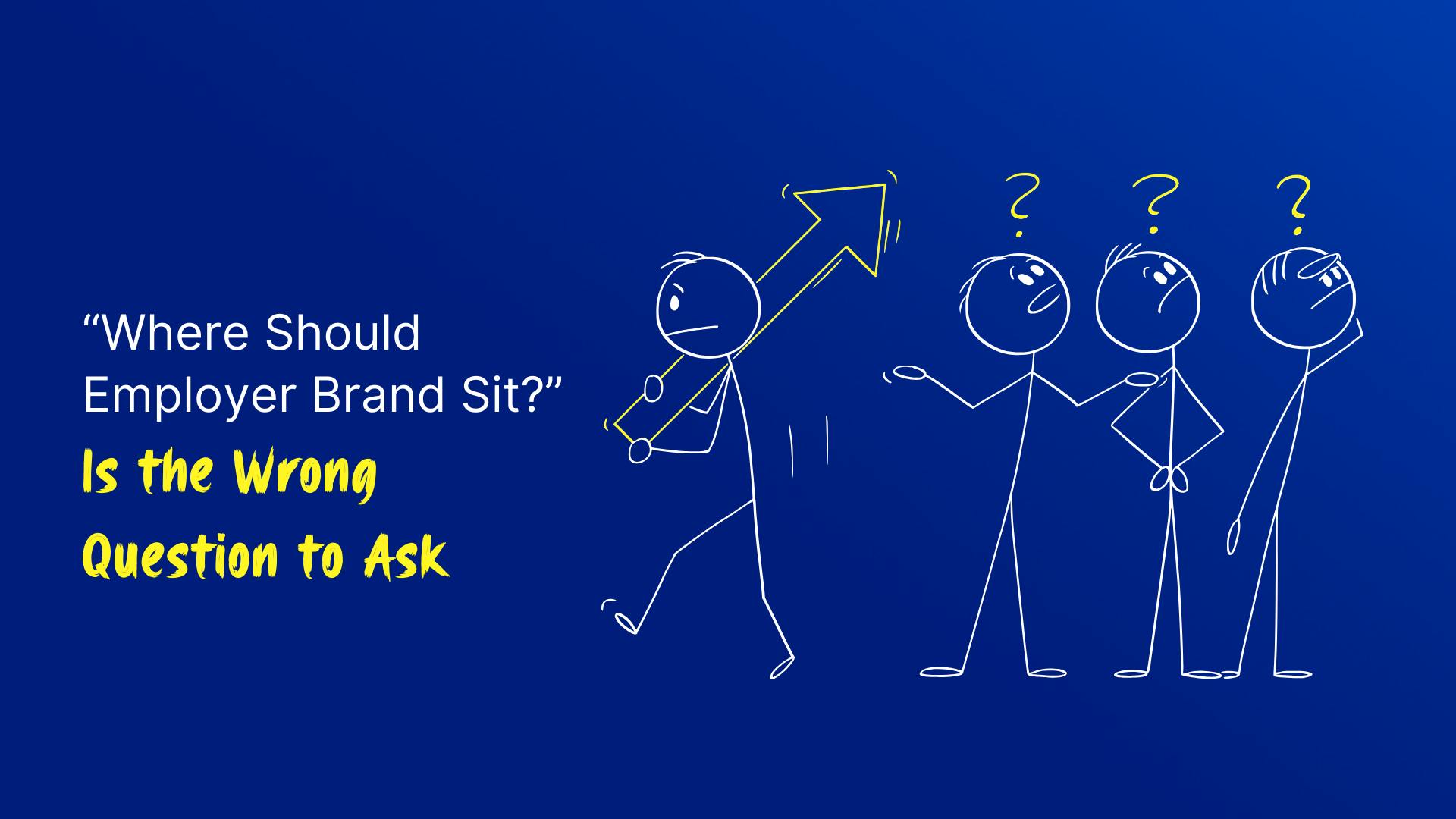
Spend any time in employer brand circles on LinkedIn and you'll notice a pattern. The same debate keeps resurfacing: who should own employer branding? TA thinks it's theirs. Marketing thinks it's theirs. HR thinks it lives inside people strategy. And over the last couple of years, I've noticed internal communications quietly entering the conversation and staking a claim too.
It's still asking the wrong question.
"If I had an hour to solve a problem, I would spend 55 minutes defining what it really was - and then the last five minutes to solve it would become very simple." - Albert Einstein
---
The argument usually goes something like this: Marketing has the brand expertise but doesn't understand the talent landscape. TA has the candidate knowledge but doesn't know how to build a brand. And internal comms - well, they talk to employees every day, so surely it's partly theirs too? Except I'm noticing internal comms is increasingly moving into People and Culture functions anyway, which means the boundaries keep shifting even as the argument continues.
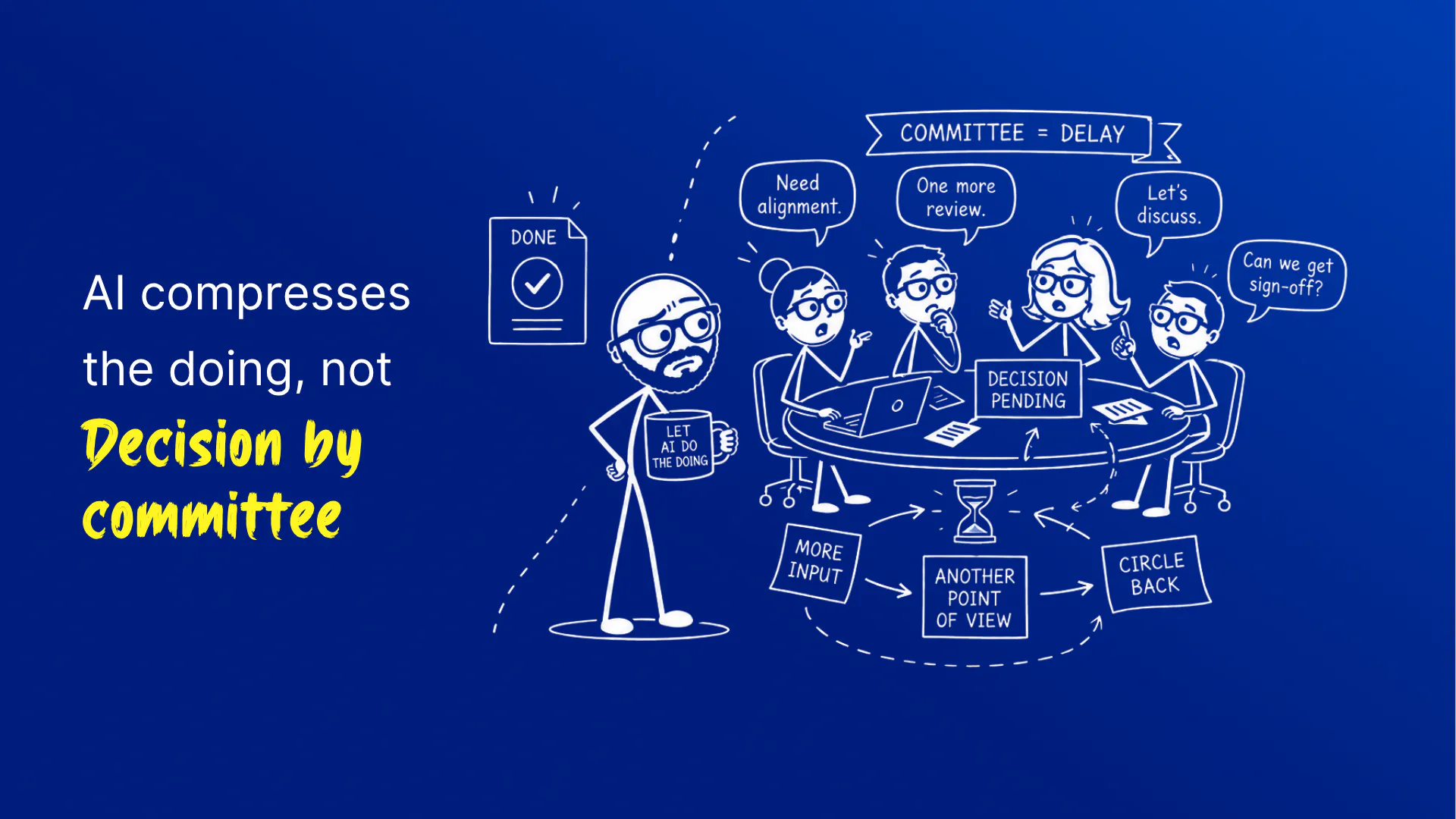
Round and round it goes, usually resulting in a working group, a RACI matrix nobody follows, and a careers page that's a committee decision.
The ownership fight is a symptom. It exists because nobody can actually agree on what employer brand is in the first place. And the fix isn't a better org chart. Define the purpose clearly - the outcomes you need employer brand to deliver - and the people best positioned to deliver those results naturally come to the fore.
Strategy 101: start with where you want to be and work backwards. That doesn't just surface the processes and platforms you need - it surfaces the people. And those people are already sitting somewhere in your organisation.
I had a conversation recently with a client that illustrated this perfectly. We were deep into a discussion about deliverables and the shape of our EVP project when they asked me: "How are you using AI in your EVP?"
I answered in terms of research - how AI was helping me expedite the synthesis of employee interview data, identify patterns across large qualitative datasets, and speed up analysis without losing the nuance.
That's not what they meant at all.
They were thinking about activation. Specifically, AI-powered avatars that could answer questions for candidates and employees - personalised, dynamic, interactive content built directly on top of the EVP framework. A completely different use case, a completely different part of the journey, and a completely different set of implications for how the project would run.
Neither of us was wrong. But we spent the first part of that conversation talking about different things and didn't realise it.
If two people who are actively working together on an EVP project can use the same three-letter acronym and have very different expectations about deliverables, imagine what's happening in organisations where five departments are all claiming to own "employer brand."
Enjoying this? I can pop the next one in your inbox if you'd like.
The answer isn't a better org chart. It's a shared dictionary.
Before you debate who owns employer brand, you need the room to agree on what these four things actually are - and crucially, how they relate to each other.
Culture is what it's actually like to work somewhere. Not what you say on your careers page. It's the unwritten rules, the real decision-making dynamics, how people treat each other when they're under pressure. Culture is the truth.
EVP - the Employee Value Proposition - is the articulation of that truth. It's the framework that captures what's genuinely distinctive about working at your organisation - what you offer, what you expect, and why someone who fits will thrive. A strong EVP is specific enough to be wrong for some people. If it resonates with everyone, it's not an EVP - it's a mission statement with some perks bolted on.
Employer brand is how that EVP comes to life externally and internally. It's the visual identity, the tone of voice, the stories you tell, the experiences you create. And critically, it has to be rooted in the EVP and your culture - otherwise it's just marketing fiction, PR spin, and it will collapse the moment someone joins and discovers the reality doesn't match the promise.
Worth pausing here on a distinction that matters - employer brand is not the same as reputation. Your employer brand is what you control. Your reputation is what you can't. Reputation is built on people's actual experiences with you - what ex-employees say once they've left, how others perceive your people when they engage with them, whether you pay your suppliers on time. You can contribute to your reputation through your employer brand. But you cannot own it. The two are related, not interchangeable.
Talent marketing (or recruitment marketing, depending on your terminology) is how you attract and engage specific candidate audiences using that employer brand. It's campaigns, channels, targeting, and conversion. It's the most tactical layer, and it's the one most often confused for the whole thing.
These are four distinct things. They sit in a sequence. But the sequence doesn't require a polished, formal EVP to get started - it requires at least a basic understanding of your proposition. What do people give, and what do they get? Before you invest in something as important as your employer brand, you need to understand that exchange. Strip the jargon away and that's all an EVP really is - what do you offer someone who joins you, and what do you ask of them in return? Pay, perks, projects, prospects, people, and cultural pillars etc. Even at its most basic level, that understanding has to feed into how you present yourself as an employer. And you cannot answer those questions honestly without first understanding your culture.
Getting this clarity is harder than it sounds. These conversations take time. They surface disagreements that some organisations would rather avoid. There's usually someone who has already spent money on something that turns out to be at the wrong layer - and they'd prefer to keep going than admit the foundation isn't there.
But the alternative is worse.
Skip straight to ownership and activation, and you end up with a beautifully produced careers site that contradicts what employees are saying publicly. You end up with AI-powered experiences built on top of an EVP nobody internally believes. You end up with five teams all claiming credit for the employer brand - and none of them agreeing on what it is.
Einstein was right. Start with the definition. Get the room aligned on what you mean by culture, EVP, employer brand, and talent marketing. Agree on the sequence. Then - and only then - the ownership question answers itself.
Because when everyone understands what employer brand is and what it actually takes to build one properly, the conversation stops being "whose is it?" and starts being "how do we do this well?"
That's the conversation worth having.
Like what you're reading?
If my content resonates with you, I can deliver it to your inbox whenever I publish something new. No fluff and definitely no spam.